WhatsApp vs Phone Calls: What Actually Converts Better for B2C Sales
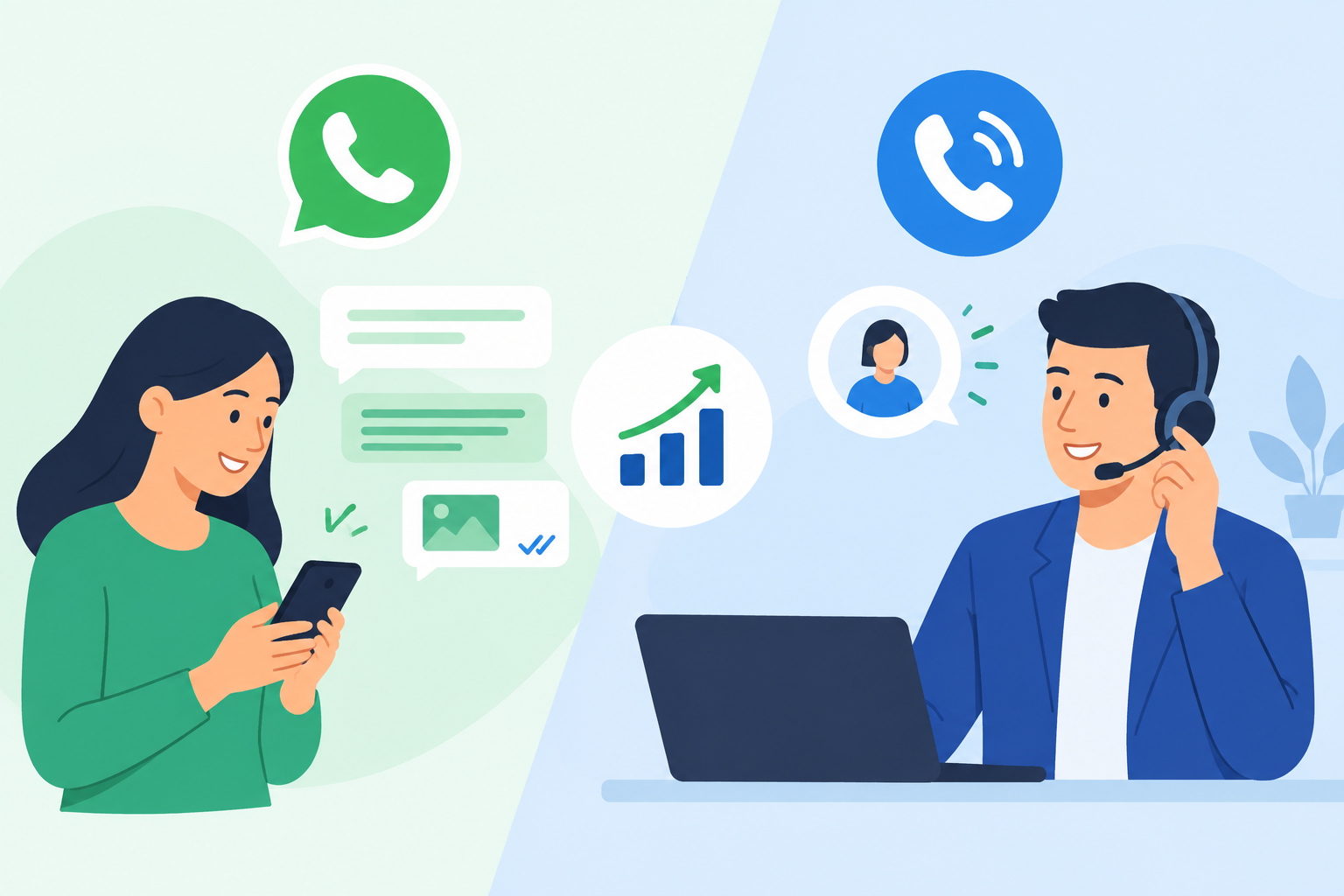
A lead fills out a form at 11:47 PM. Does your team send a WhatsApp message, or wait until morning and call? That single decision shapes whether the person remembers your brand at all by the time someone picks up the phone.
Most B2C sales teams in India now run both channels side by side, often without asking which one is actually doing the converting. WhatsApp gets credit for speed. Phone calls get credit for closing. Neither claim holds up cleanly once you look at where each channel sits in the buyer's decision, not just how fast it responds.
The debate around whatsapp vs phone calling conversion isn't really about which app performs better. It's about matching the channel to the stage the buyer is in something most teams figure out by trial and error, usually after burning through a few hundred leads. A telemarketing system that tracks both channels together tends to surface this pattern faster than gut instinct does, because you can actually see where a lead dropped off instead of guessing.
Why WhatsApp Wins the First Few Seconds
Open rates on WhatsApp sit well above 90% within the first hour. A text message doesn't interrupt someone in a meeting, doesn't require them to speak a language they're rusty in, and doesn't carry the built-in suspicion that unknown calls now carry in India, where spam and scam calls have trained people to screen every unfamiliar number.
For a first touch, this matters more than it sounds like it should:
A WhatsApp message can carry a brochure, price list, or demo video without anyone needing to sit through it live
- The buyer replies on their own time, which lowers the pressure that makes cold leads go silent
- Read receipts tell you exactly where the conversation stalled, which a missed call never does
This is why whatsapp call sales sequences work so well. Send a message first. Once the buyer replies or shows interest, follow up with a call. That order gets better response rates than opening with a cold call. The message warms the buyer up, so by the time the phone rings, they're already expecting it.
Why Phone Calls Still Close the Deal
None of that means calling is obsolete. It means calling has moved later in the funnel, to the point where WhatsApp has already done the qualifying.
A voice conversation still does things text can't. Objections get resolved in real time instead of over three separate replies spread across an afternoon. Tone carries urgency that a message, however well written, can't fake. And for anything involving money EMI plans, insurance premiums, real estate bookings most Indian buyers still want to hear a human voice confirm the details before they commit.
Data from telecalling teams across sectors backs this up. Phone call sales made after a WhatsApp warm-up convert noticeably better than cold calls made with no prior contact. The call isn't competing with the message. It's finishing what the message started.
WhatsApp vs Phone Calling Conversion: What the Numbers Actually Show
Here's where whatsapp vs phone calling conversion gets more specific than "both work."
A cold WhatsApp message, sent with no context, converts far less than one sent right after a form fill or ad click, while the buyer's intent is still fresh
- A cold call with no WhatsApp lead-in often gets dropped in the first ten seconds, because the buyer doesn't recognize the number and assumes it's spam
- A sequence that opens with WhatsApp and follows up with a call within 24 hours outperforms either channel used alone
None of this means WhatsApp is "better" or calling is "outdated." It means sequencing decides the outcome more than the channel does. A team that only measures whatsapp vs phone call sales as two separate scorecards will keep missing this, because the real win happens in the handoff between them, not in either channel individually.
The Sequencing That Actually Works
Here's the pattern that tends to work best, even for teams that haven't written it down anywhere:
Send a WhatsApp message within minutes of the lead coming in, while intent is still high
- Include something useful: pricing, a comparison sheet, a short video not just a generic "hi, interested?"
- Call within a few hours if there's a reply, or the next day if there's silence
- Use the call to handle objections and close, not to reintroduce the product from scratch
Skipping the WhatsApp step and going straight to a call wastes the advantage of a warm lead. Skipping the call and trying to close entirely over text usually stalls out right before the buyer needs to hand over money, which is exactly the moment they want a person on the line.
Where This Breaks Down in Practice
The theory is easy. Execution is where teams lose the thread. Agents miss the follow-up window. Leads sit logged in one place but get called from a personal number nobody tracks. By the end of the week, no one can say which leads got a WhatsApp message, which got a call, and which got neither.
That gap, not any real weakness in either channel, is what drives most of the confusion around whatsapp vs phone calling conversion. It's a visibility problem. Teams that fix it track WhatsApp vs calling activity against the same lead record: message sent, reply received, call made, outcome logged. One view, not two tools that don't talk to each other.
The real question was never WhatsApp or phone calls. It's whether your team can see, lead by lead, which sequence actually got someone to say yes, and whether they're repeating it on purpose.
Post a reply